
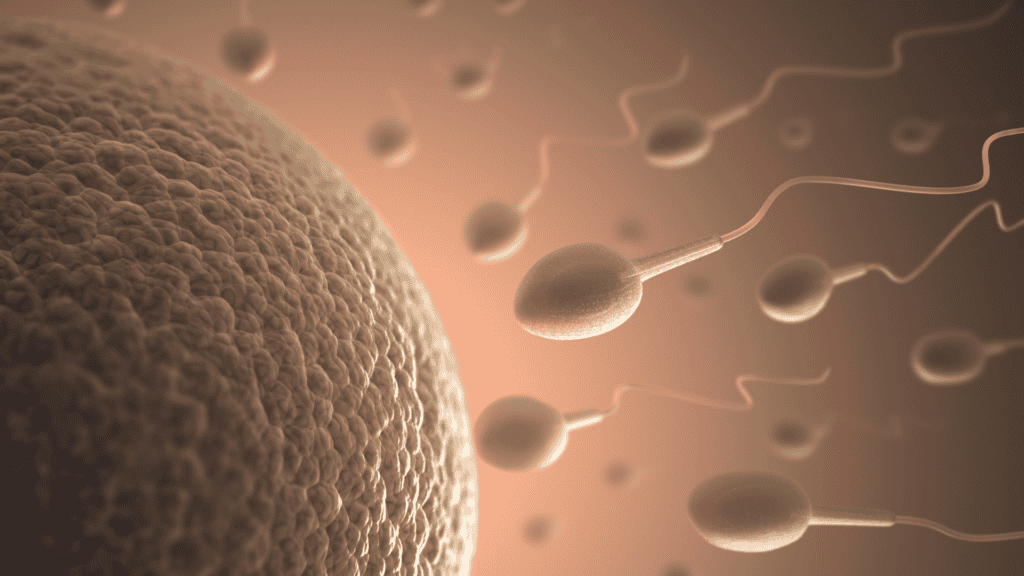
The internet offers hundreds of tips to improve sperm motility, but few have scientific backing. We review which habits may help, when it is necessary to seek advice and what new research is under way.
When a couple has difficulty conceiving and the semen analysis shows abnormal motility, the immediate reaction is usually to look for ways to improve sperm motility. Diets, antioxidants, food supplements and natural remedies flood internet searches; however, the scientific evidence supporting them is, for the most part, very limited.
There is no universal formula to increase sperm motility. The effectiveness of any intervention depends above all on the cause of the problem, but there are factors that can be acted upon. In some cases, lifestyle changes or the treatment of reversible medical causes (such as clinical varicocele, urogenital infections or hormonal imbalances) can support better semen quality. In others, a personalised andrological assessment (aimed at optimising the seminal environment or prescribing targeted therapies) or assisted reproduction techniques will be needed.
Why is sperm motility so important?
Sperm motility is one of the main parameters analysed in a clinical semen analysis, as it is essential for sperm to successfully travel the long and hostile journey through the female reproductive tract to reach the egg.
Asthenozoospermia: the medical term for slow sperm
When motility is reduced or sperm do not move progressively, we speak of asthenozoospermia or low sperm motility, one of the most common alterations of male fertility.
In Western countries, around 17% of couples have fertility problems. In Spain, it is estimated that about 800,000 couples have difficulty achieving a pregnancy1 and the male factor is involved in approximately half of the cases, being the sole cause in around 20%.2 That is why improving male reproductive health has become a priority for both clinical practice and research.
Science-backed habits to improve sperm motility
Sperm motility does not depend only on the organs of the male reproductive system that produce seminal fluid and allow sperm to mature and be transported; there is growing evidence that it also reflects the general state of health of the body. In fact, it is related to metabolic and cardiovascular health.
Several studies have observed that conditions such as obesity, type 2 diabetes or metabolic syndrome may be associated with poorer semen quality, probably due to hormonal changes, chronic inflammation and increased oxidative stress.3 This explains why specialists insist that improving sperm motility is not just about taking food supplements, but about looking after health as a whole.
Sperm production is a continuous process that can be affected by many factors and, although not all of them can be modified, science indicates that adopting healthy habits can help optimise semen quality and improve reproductive health.
The recommendations with the strongest scientific support include:4
- Quitting smoking: tobacco is associated with poorer semen quality and greater oxidative stress.
- Drinking alcohol only occasionally.
- Maintaining a healthy weight: obesity can upset the hormonal balance and affect sperm production.
- Moving regularly, avoiding a sedentary lifestyle and very intense exercise.
- Eating a balanced diet: a healthy eating pattern naturally provides antioxidants.
- Sleeping 8 hours and managing stress, both factors that influence reproductive health.
Does heat matter? What about vitamins for slow sperm?
A very common question in fertility consultations is whether excess testicular temperature or a lack of certain micronutrients is directly responsible for low motility.
Testicular temperature and environmental factors
According to the guidelines of the European Association of Urology (EAU), the evidence is limited, although sustained heat in that area could affect sperm production and motility.5 Reducing continuous exposure to certain environmental pollutants or toxic substances related to the workplace is also recommended.5
Are vitamins effective for slow sperm?
Another frequent question concerns the effectiveness of vitamins against low sperm motility. In recent years, antioxidants such as coenzyme Q10, zinc, selenium, vitamins C and E, folic acid, omega-3 fatty acids and L-carnitine have been studied.
There is currently no food supplement capable of improving sperm motility in all patients. However, the most recent scientific reviews conclude that some patients who take antioxidants may show improvements in certain semen parameters, although results vary. For this reason, an individual medical assessment is advisable before starting any supplementation.5,6
When low motility does not depend on lifestyle
It is important to stress that not all semen alterations can be corrected by changing lifestyle habits. There are specific physical and medical abnormalities, such as varicocele (testicular venous dilation), active infections of the seminal tract, hormonal imbalances or genetic causes, that require specific diagnosis and management by a urologist. In other cases, the asthenozoospermia will be idiopathic, meaning its cause is unknown.
The spermatogenesis cycle: why changes take 3 months
It is important to bear in mind that immediate results cannot be expected. The complete production of sperm, or spermatogenesis, takes approximately 74 days, plus another 10 to 14 days for maturation and transport. That is why repeating a semen analysis before this period (about three months) may not yet reflect the real effect of the changes made.
In addition, a single clinical semen analysis does not always reflect the real situation, as factors such as a recent infection, fever or certain medicines can temporarily change semen quality. For this reason, in some cases it is recommended to repeat the analysis after a few weeks.
Slow sperm: medical solutions and lines of research
When lifestyle changes are not enough or there is a medical cause that cannot be corrected, the next step is to consider the different therapeutic options, such as assisted reproduction techniques, from artificial insemination to in vitro fertilisation or intracytoplasmic sperm injection (ICSI), depending on the characteristics of each couple.
Research is also trying to fill the therapeutic gap by offering alternatives for men with mild or moderate alterations who are not yet candidates for other treatments.
New lines of scientific research: Prokrea’s pentoxifylline gel
One of these lines, developed by PROKREA, is investigating a pentoxifylline vaginal gel (PKB171) to increase sperm motility at the moment of fertilisation. The first in vitro studies have shown an increase in progressive motility without compromising sperm viability. These results must be confirmed in clinical trials before this strategy can be incorporated into routine clinical practice.
Looking for quick fixes is usually the first impulse when pregnancy does not come, but scientific evidence suggests that improving sperm motility rarely depends on a single food, vitamin or supplement. Knowing the cause, adopting healthy habits and seeing a specialist when necessary remain the most effective tools.
References
-
Pacientes SEF. FAQS. Available at: https://www.sefertilidad.net/?seccion=pacientesSEF&subSeccion=faqs. Last accessed: July 2026.
-
Palma C, Vinay JI. Infertilidad masculina. Rev Med Clin Condes 2014;25(1):122-128
-
Ferramosca A, Zara V. Diet and Male Fertility: The Impact of Nutrients and Antioxidants on Sperm Energetic Metabolism. Int J Mol Sci. 2022;23:2542.
-
Practice Committee of the American Society for Reproductive Medicine. Optimizing natural fertility: a committee opinion. Fertil Steril. 2022;117(1):53-63. doi:10.1016/j.fertnstert.2021.09.138.
-
European Association of Urology. EAU Guidelines on Sexual and Reproductive Health – Male infertility. Latest update. Last accessed: July 2026.
-
WHO. Guideline for the prevention, diagnosis and treatment of infertility. 2025. Last accessed: July 2026.