“Infertility is a disease of the male or female reproductive system defined by the failure to achieve pregnancy after 12 months or more of regular unprotected sexual intercourse. In reproductive medicine, this period is usually reduced to 6 months when the woman is 35 years or older.” ¹ ²
“Infertility is a disease of the male or female reproductive system defined by the failure to achieve pregnancy after 12 months or more of regular unprotected sexual intercourse. In reproductive medicine, this period is usually reduced to 6 months when the woman is 35 years or older.” ¹ ²
The global increase in fertility problems represents a public health threat that is raising concern among authorities and fertility specialists.³
1 in 6 people
of reproductive age experience infertility at some point in their lives³ ⁴.
800,000 couples
in Spain are estimated to have fertility problems⁵.
17% of couples
in Spain are estimated to have fertility problems⁵.
The male factor is solely responsible in 20% of cases
and can contribute to a couple’s fertility problem in up to 50% of cases
0%
0%
⁶
⁶
Infertility due to asthenospermia
Male infertility refers to infertility caused by abnormalities in semen characteristics, such as low sperm count (oligospermia), reduced sperm motility (asthenozoospermia or asthenospermia), abnormal morphology (teratozoospermia), or a combination thereof (oligoasthenozoospermia)⁶.
OLIGOSPERMIA
oligospermia
LOW CONCENTRATION
ASTENOSPERMIA
ASTENOSPERMIA
MOTILITY PROBLEMS
OLIGOASTENOSPERMIA
OLIGOASTHENOTERATOZOOSPERMIA
POOR MOTILITY WITH LOW CONCENTRATION
The World Health Organization (WHO) establishes reference values for the quality of a semen sample according to the criteria set out in the fifth edition of the WHO Laboratory Manual for the Examination and Processing of Human Semen (2010), despite the publication of an updated edition of the WHO Laboratory Manual for the Examination and Processing of Human Semen in 2021.⁷ ⁸
There are two levels of asthenozoospermia based on severity, depending on the percentage of immotile sperm.⁹
MILD OR MODERATE ASTHENOSPERMIA
Sperm immobility
60-75%
SEVERE ASTHENOSPERMIA
Sperm immobility
>75%
CAUSES OF ASTHENOSPERMIA
The causes that can affect sperm motility and lead to asthenospermia are varied and have not been precisely defined. It can occur due to various factors:¹⁰ ¹³
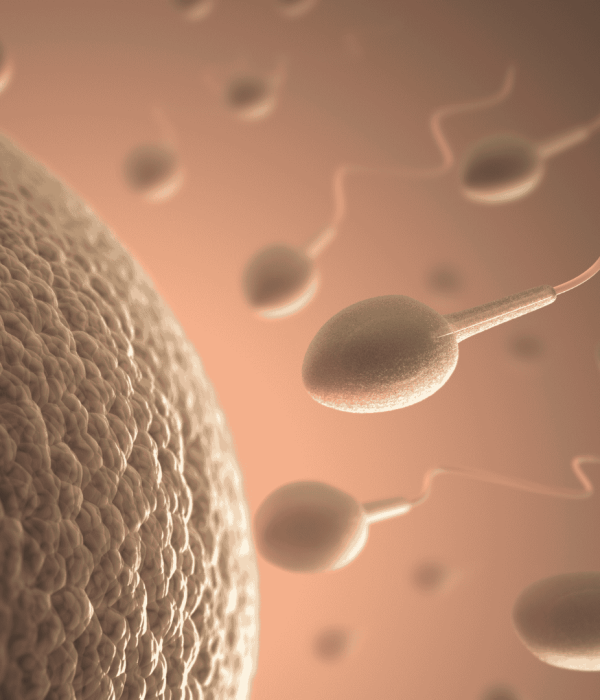
Asthenozoospermia is a fairly common cause of male infertility. Sperm must travel a long distance from where they are deposited in the vagina until they reach the egg in the fallopian tubes for fertiliszation to occur.
Therefore, if sperm motility is reduced, sperm have difficulty completing this journey and fertilising the egg, which causes infertility.
When sperm do not move or move inadequately (without forward progression), natural conception becomes very difficult. In these cases, it may be necessary to resort to interventional treatments such as assisted reproductive technologies when first-line measures, such as improving lifestyle habits and quality of life do not work, or when conventional pharmacological treatments are not effective.
WHO laboratory manual for the examination and processing of human semen, 5th ed. Geneva: World Health Organization; 2010.
WHO laboratory manual for the examination and processing of human semen, sixth edition. Geneva: World Health Organization; 2021.
Dahlberg B. Sperm motility in fertile men and males in infertile units: in vitro test. Arch Androl. 1988;20(1):31-4.
Heidary Z, Saliminejad K, Zaki-Dizaji M, Khorram Khorshid HR. Genetic aspects of idiopathic asthenozoospermia as a cause of male infertility. Hum Fertil (Camb). 2020 Jun;23(2):83-92.
Nsota Mbango JF, Coutton C, Arnoult C, Ray PF, Touré A. Genetic causes of male infertility: snapshot on morphological abnormalities of the sperm flagellum. Basic Clin Androl. 2019 Mar 4;29:2.
Shahrokhi SZ, Salehi P, Alyasin A, Taghiyar S, Deemeh MR. Asthenozoospermia: Cellular and molecular contributing factors and treatment strategies. Andrologia. 2020 Mar;52(2):e13463.
Tu C, Wang W, Hu T, Lu G, Lin G, Tan YQ. Genetic underpinnings of asthenozoospermia. Best Pract Res Clin Endocrinol Metab. 2020 Dec;34(6):101472.