
According to the World Health Organization (WHO), infertility affects approximately one in six people of reproductive age worldwide, reflecting its global impact beyond individual cases.1
Fertility depends on many factors, but there is one that is discussed far less than egg quality: the ability of sperm to move. For a natural pregnancy to occur, sperm must travel a long way to reach the egg, and when that journey slows down in the fallopian tubes, the chances of fertilisation decrease. This is what specialists call asthenozoospermia or asthenospermia, a condition that affects sperm motility and is one of the most common causes of male-factor infertility. Diagnosing it makes it possible to identify treatable causes and reproductive alternatives.
Although receiving this diagnosis can be worrying, the reality is that it does not always prevent pregnancy. Today there are different strategies to address the problem, and research continues to advance in search of new therapeutic alternatives. In other words, asthenozoospermia means that sperm move below the parameters considered normal, which makes it harder for them to travel properly and reach the egg, as the Spanish Fertility Society points out.
What exactly is asthenozoospermia?
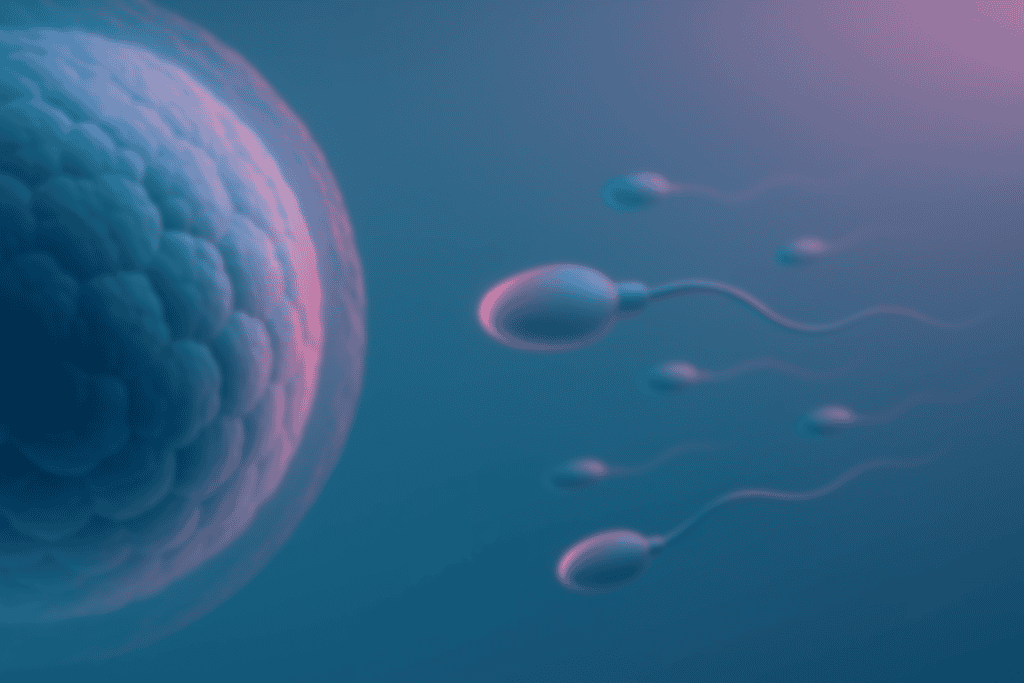
Asthenozoospermia, also known as low sperm motility, is a condition in which sperm do not move at the speed needed to reach the egg. It is not about having fewer sperm or sperm with an abnormal shape; in this case, the problem lies in their ability to “swim”. Although it may seem like a minor detail, this movement is essential for fertilisation to happen naturally.
The condition is diagnosed with a semen analysis (seminogram), a simple, non-invasive test that looks at different characteristics such as sperm concentration, morphology and motility.
Degrees of severity and definitive diagnosis
However, it is important to bear in mind that a single analysis does not always give a definitive picture, as semen quality can be temporarily affected by an infection, an episode of fever, certain medicines or even stressful situations. For this reason, it is sometimes recommended to repeat the test before establishing a definitive diagnosis.
Once the diagnosis is confirmed, the semen analysis assesses the severity of asthenozoospermia according to the percentage of non-motile sperm: it is considered mild to moderate when between 60% and 75% of sperm are immotile, while above 75% the condition is considered severe.2
Why does sperm motility decrease?3,4,5,6
The causes of asthenozoospermia are varied and, in many patients, several factors are involved at the same time.
Direct medical factors
The most common medical problems include varicocele (a dilation of the veins of the testicle), some infections, inflammatory processes and hormonal imbalances. There are also rare genetic diseases that directly affect how sperm work.
Lifestyle and oxidative stress
It should not be forgotten that reproductive health largely reflects a patient’s lifestyle. Smoking, drinking too much alcohol, obesity, an unbalanced diet or continuous exposure to certain environmental pollutants are all factors that can impair semen quality.
Oxidative stress must also be added to these factors: a biological process that damages cells and is becoming increasingly important in research on male infertility. Even something as everyday as prolonged exposure to heat in the testicular area can have a negative effect on sperm production and motility. And although much more is now known about this condition, there are still many cases in which no specific cause can be identified; this is what specialists call idiopathic asthenozoospermia.
Male infertility is involved in approximately 50% of cases of couple infertility, which underlines the importance of semen analysis in the initial reproductive assessment.7
Is it possible to get pregnant with asthenozoospermia?
Yes, it is possible to achieve a pregnancy with asthenozoospermia. Fertility depends on many factors and sperm motility is only one of them, so it does not necessarily mean that pregnancy cannot be achieved. Some men with mildly impaired motility conceive naturally without difficulty, while others may need medical help, especially when other fertility problems are also present.
That is why it is important to avoid jumping to conclusions after receiving a semen analysis result. It is essential to look at the overall context, such as the couple’s age, the woman’s ovarian reserve, how long they have been trying to conceive and the rest of the semen parameters, as all of them influence the real chances of conception.
If pregnancy does not happen after a reasonable period of trying, a full fertility work-up is recommended to find the most suitable strategy for each couple.
Slow sperm: current solutions and options
The treatment of asthenozoospermia depends on the cause of the low sperm motility. There are currently several options, so talking about just one would oversimplify a much more complex reality.
Medical approach and lifestyle changes
The first step is to identify whether there is a reversible cause, for example treating an infection, correcting a varicocele or managing a hormonal imbalance that is affecting semen quality.
At the same time, specialists usually recommend lifestyle changes that support reproductive health, including quitting smoking, maintaining a healthy weight, exercising regularly and following a balanced diet. Antioxidant supplements may also be used in some patients but, although some studies suggest a possible benefit, the scientific evidence is still limited and their use should be individualised.
Assisted reproduction techniques
When these measures are not enough or the condition is significant, assisted reproduction techniques are an alternative. Depending on the case, artificial insemination, in vitro fertilisation or intracytoplasmic sperm injection (ICSI), a technique that places a single sperm directly into the egg, may be used.
Research is looking for new solutions
While current treatments continue to help thousands of couples every year, research keeps exploring new ways to improve sperm motility. One of the most innovative lines is being developed by PROKREA, which is investigating the efficacy of a pentoxifylline vaginal gel (PKB171) designed to temporarily increase sperm motility at the moment of fertilisation.8
The aim of this research is to develop new therapeutic options for men with male-factor infertility associated with low sperm motility. The first studies have shown promising results, with an increase in progressive motility without compromising sperm viability. However, clinical trials must be completed to confirm its efficacy and safety before it can become an option available to patients.
It is worth remembering that asthenozoospermia, or low sperm motility, does not always prevent pregnancy. An individualised approach and the advice of a fertility specialist make it possible to choose the best strategy in each case and maximise the chances of conception.
Frequently asked questions
Can asthenozoospermia be cured?
It depends on the cause. In some cases it is possible to correct the problem or improve sperm motility with medical treatment or lifestyle changes; in others, the aim is to increase the chances of pregnancy through assisted reproduction techniques.
Can sperm motility be improved?
In some men, yes. Identifying and treating the cause, giving up harmful habits and controlling factors that affect semen quality can help improve semen analysis results.
How long does it take for a semen analysis to improve?
Producing new sperm takes approximately two to three months, so lifestyle changes or certain treatments are usually assessed with a new semen analysis after a few weeks.
Is assisted reproduction always necessary?
No. Many couples achieve a pregnancy without these techniques; the decision depends on the degree of impairment, how long the couple has been trying to conceive and whether other fertility factors are present.
References
-
World Health Organization (WHO). Infertility. Fact sheet.
-
Dahlberg B. Sperm motility in fertile men and males in infertile units: in vitro test. Arch Androl. 1988;20(1):31-4.
-
Heidary Z, Saliminejad K, Zaki-Dizaji M, Khorram Khorshid HR. Genetic aspects of idiopathic asthenozoospermia as a cause of male infertility. Hum Fertil (Camb). 2020 Jun;23(2):83-92.
-
Nsota Mbango JF, Coutton C, Arnoult C, Ray PF, Touré A. Genetic causes of male infertility: snapshot on morphological abnormalities of the sperm flagellum. Basic Clin Androl. 2019 Mar 4;29:2.
-
Shahrokhi SZ, Salehi P, Alyasin A, Taghiyar S, Deemeh MR. Asthenozoospermia: Cellular and molecular contributing factors and treatment strategies. Andrologia. 2020 Mar;52(2):e13463.
-
Tu C, Wang W, Hu T, Lu G, Lin G, Tan YQ. Genetic underpinnings of asthenozoospermia. Best Pract Res Clin Endocrinol Metab. 2020 Dec;34(6):101472.
-
Practice Committee of the American Society for Reproductive Medicine. Optimizing natural fertility. Fertil Steril. 2022;117(1):53–63.
-
Trilla C, Navarro L, Rius M, Espinós JJ. Pentoxifylline vaginal gel improves sperm motility and vitality in asthenozoospermic males: A randomized, blinded, in vitro study. Front Pharmacol. 2025 Nov 26;16:1669045. doi: 10.3389/fphar.2025.1669045.